
BESS Thermal Insulation - Best Thermal Insulation Products for BESS—Battery Energy Storage Systems

BESS Thermal Insulation - Buy high-performance BESS thermal insulation from Wedge. Compare WedGel EV aerogel pads, CAC350, FSMP microporous boards and fireproof enclosure panels for battery thermal-runaway protection.
Battery Energy Storage Systems require more than ordinary cabinet insulation. A complete BESS thermal-protection system may need thin cell separators, electrically insulating module barriers, rigid firewalls, cabinet linings and fire-resistant container partitions.
For this reason, the best BESS insulation solution is normally a combination of different materials, selected for each part of the battery system.
Wedge Industries Limited offers several branded insulation products suitable for BESS applications, ranging from ultra-thin WedGel EV aerogel thermal barriers to FSMP microporous boards, FP1000 fireproof boards, MagSil vermiculite panels and high-temperature installation accessories.
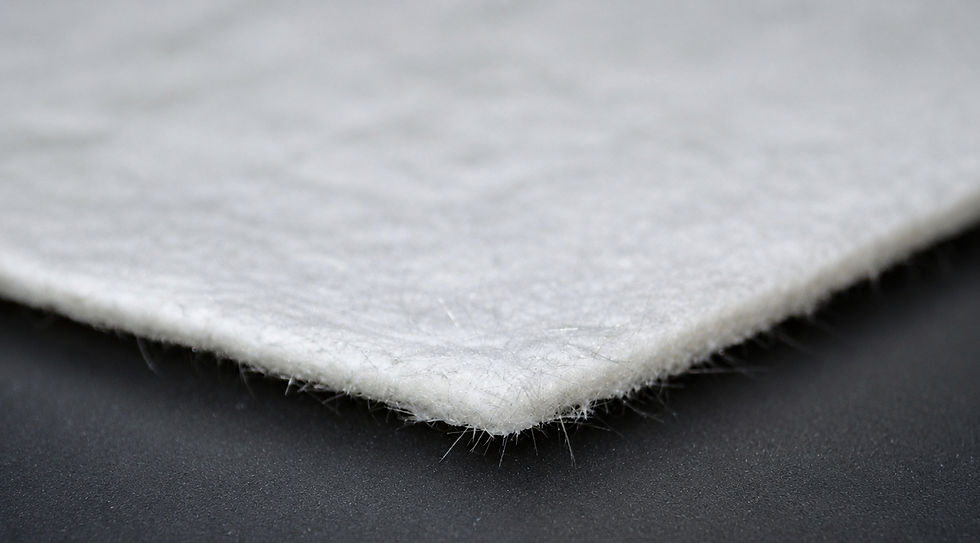
Which Wedge Products Are Most Suitable for BESS?
The most suitable products from the Wedge Insulation catalogue are:
Priority | Wedge product | Recommended BESS application |
1 | WedGel EV 650EV | Ultra-thin cell-to-cell thermal barriers |
2 | WedGel EV FSMP 1000EV | Rigid module-to-module fire barriers |
3 | WedGel EV OXF | Flexible insulation around complex battery geometries |
4 | WedGel EV AlSi 250EV | Flexible, very-high-temperature protection |
5 | WedGel CAC350 | Strong aerogel composite barriers and heat shields |
6 | FSMP microporous boards and panels | Rack, module, cabinet and top-cover thermal barriers |
7 | FP1000 and SP1150 fireproof boards | BESS cabinet and container fire partitions |
8 | MagSil fire-resistant vermiculite boards | Container walls, fire-rated enclosures and equipment-room partitions |
9 | WedgeMW mineral wool | General container-wall thermal and acoustic insulation |
10 | WSC600 high-silica cloth and HTAL1000 adhesive | Protective facings, wraps and installation accessories |
The WedGel EV product family should be the first product range offered to battery manufacturers and BESS integrators, because it is specifically designed for battery cell, module and pack thermal barriers.
BESS Thermal Insulation - Why BESS Requires Special Thermal Insulation
BESS Thermal Insulation - Lithium-ion cells can generate heat during normal charging and discharging. Abnormal conditions such as internal short circuits, mechanical damage, overcharging or manufacturing defects can create much higher temperatures.
When one cell enters thermal runaway, heat may transfer to neighbouring cells and modules. This can lead to progressive thermal-runaway propagation.
A properly engineered passive insulation system can help:
Reduce heat transfer between adjacent cells
Delay cell-to-cell and module-to-module propagation
Electrically isolate battery components
Protect busbars and the battery-management system
Reduce heat exposure to the battery enclosure
Support fire compartmentation inside the BESS container
Provide additional response time for detection, ventilation and suppression systems
No single insulation material performs all these functions. The insulation should be selected according to its position in the system.

WedGel EV Aerogel Insulation for BESS Batteries
Best overall range for cell, module and battery-pack protection
WedGel EV is Wedge’s most directly applicable product family for BESS thermal-runaway protection.
The range consists of four grades:
WedGel 650EV
WedGel AlSi 250EV
WedGel FSMP 1000EV
WedGel OXF
These products are lightweight, thin, thermally insulating, electrically insulating and flame retardant. Available thicknesses range from approximately 0.24 mm to 10 mm, depending on the grade. The catalogue lists thermal conductivity at 25°C from 0.018 to 0.040 W/m·K, UL94 flame-retardant performance and EN 13501-1 Class A1 fire reaction across the four grades.
WedGel 650EV—Best for Minimum Thickness
Recommended for:
Cell-to-cell separators
Prismatic cell sidewalls
Module-to-module barriers
Top-of-module heat shields
BMS and busbar thermal isolation
WedGel 650EV provides the lowest reported thermal conductivity in the battery-specific range:
Thermal conductivity: 0.018 W/m·K at 25°C
Service temperature: −50°C to +700°C
Short-term temperature resistance: 1,400°C
Available thickness: 0.24–10 mm
Breakdown voltage: ≥10 kV/mm
Compression strength: 85 kPa at 10% compression
This is the preferred Wedge grade where the customer needs the highest insulation performance in the smallest possible gap.
WedGel FSMP 1000EV—Best Rigid Module Barrier
Recommended for:
Module-to-module insulation
Rigid battery firewalls
Top-of-rack heat barriers
Structural battery-pack barriers
High-temperature gap fillers
Key catalogue properties include:
Thermal conductivity: 0.021 W/m·K at 25°C
Service temperature: +6°C to +1,000°C
Short-term temperature resistance: ≥1,400°C
Thickness: 2–10 mm
Compression strength: 330 kPa
Breakdown voltage: ≥10 kV/mm
FSMP 1000EV is the preferred grade where a BESS designer requires a more rigid and compression-resistant thermal barrier rather than a soft blanket.
WedGel OXF—Best for Flexible and Complex Shapes
Recommended for:
Cylindrical cell arrangements
Irregular module gaps
Curved surfaces
Battery-pack corners
BMS, connector and busbar isolation
WedGel OXF offers very high flexibility, thicknesses from 0.3 mm to 10 mm, thermal conductivity of 0.023 W/m·K at 25°C and breakdown voltage of at least 10 kV/mm. Its flexibility makes it easier to fit around complex battery geometries.
WedGel AlSi 250EV—Best for Maximum Temperature Resistance
Recommended for:
High-temperature module barriers
Areas exposed to direct flame or hot ejecta
Flexible top shields
High-temperature battery compartment protection
WedGel AlSi 250EV provides:
Service temperature up to 1,300°C
Short-term temperature resistance of at least 1,500°C
Thickness from 0.8 mm to 10 mm
High flexibility
Breakdown voltage between 2 and 8 kV/mm
Its thermal conductivity is higher than 650EV, but it offers the highest temperature capability in the WedGel EV range. It is therefore suitable where temperature resistance is more important than achieving the lowest possible thermal conductivity.

WedGel CAC350 Carbon Aerogel Composite
Best for strong, flexible and electrically insulating battery barriers
WedGel CAC350 is a carbon-fibre-reinforced silica aerogel composite supplied in rolls or sheets.
It combines:
Thermal conductivity of 0.021 W/m·K at 25°C
Continuous service temperature of 350°C
Short-term resistance to 1,200°C
Thickness from 1 mm to 25 mm
Compression strength of 1.75 MPa
UL94 V-0 flame-retardant classification
Insulation resistance of at least 500 MΩ at 2,500 V DC
Flashover withstand of 3,820 V DC without breakdown
The catalogue specifically identifies CAC350 for EV battery cell-to-cell and module-to-module fire barriers.
When should CAC350 be selected?
CAC350 is particularly attractive when the customer requires:
Better mechanical strength than a conventional soft aerogel blanket
A black finished thermal barrier
Flexible roll or sheet supply
High electrical resistance
Die-cut module separators
Combined thermal, vibration and fire-barrier performance
For large stationary battery modules, CAC350 can be proposed as an alternative to standard aerogel pads where durability and compression strength are important.
FSMP Microporous Insulation for BESS Modules and Cabinets
Best rigid insulation where space is limited
Wedge’s FSMP microporous insulation family includes boards, blankets, slated panels, ceramic-cloth-covered panels, hydrophobic boards and Slim MicroSilica boards.
The product family has reported conductivity between 0.021 and 0.062 W/m·K, temperature classifications from 800°C to 1,260°C and Class A1 non-combustible performance.
Recommended FSMP products for BESS
FSMP 1000S HD and FSMP 1200 HD
These high-strength microporous boards are suitable candidates for:
Rigid module firewalls
Battery-rack side and top barriers
Cabinet-to-cabinet thermal separation
Barriers below or above battery modules
Structural insulation behind fireproof boards
The high-strength FSMP range provides thermal conductivity as low as 0.022–0.024 W/m·K at 200–400°C, Class A1 non-combustible performance and compressive strength up to 0.78 MPa.
FSMP-HEC Microporous Ceramic-Cloth Panels
FSMP-HEC panels have a fumed-silica microporous core covered with high-temperature glass cloth.
Available grades include:
HEC 1260
HEC 1100S
HEC 1100T
HEC 800
HEC 1200HD
The cloth covering improves handling, protects the core and helps reduce dust during fabrication and installation. These panels can be considered for cabinet barriers, cable-area protection and removable thermal shields.
MS Slim MicroSilica Boards
Wedge MS grades include:
MS 1200
MS 1000S
MS 1000T
MS 900
MS 1200HD
These are thin, rigid, Class A1 non-combustible microporous boards with temperature classifications from 900°C to 1,200°C. They are suitable where BESS cabinet or rack designers need a rigid barrier with very low heat transfer but cannot accommodate a thick conventional insulation board.
FP1000 and SP1150 Fireproof Boards
Best for BESS cabinet and container fire partitions
Wedge FP1000 and SP1150 are high-density calcium-silicate-based fireproof boards for structural fire protection.
The catalogue reports:
Property | FP1000 | SP1150 |
Fire rating at 10 mm | 240 minutes | 120 minutes |
Short-term temperature | 1,200°C | 1,000°C |
Thermal conductivity at 20°C | 0.16 W/m·K | 0.18 W/m·K |
Density | 880–900 kg/m³ | 1,150 kg/m³ |
Thickness availability | 4–30 mm | 4–30 mm |
Fire classification | A1 | A1 |
These boards are large, mechanically strong and suitable for fire doors, steel duct cladding, smoke barriers and industrial apparatus construction.
Recommended BESS applications
Internal BESS container partitions
Battery-room firewalls
Separation between battery and power-conversion compartments
Fire-resistant cabinet walls
Cable and electrical-room partitions
Enclosure doors and access panels
External protection around battery racks
Important: A material-level fire rating does not automatically give the complete BESS enclosure the same rating. The complete wall, joint, frame, door and penetration assembly must be tested or assessed for the project.
CalSil HDSP450 Self-Supporting Panels
Best for mechanically strong equipment enclosures
CalSil HDSP450 is a calcium-silicate-based, self-supporting mineral panel with:
Continuous temperature classification of 450°C
Thermal conductivity of 0.16 W/m·K
Compressive strength of 9.3 N/mm²
Standard panel size of 2,440 × 1,220 mm
Thicknesses from 6 mm to 25 mm
The catalogue recommends HDSP450 for apparatus enclosures, fire-protection walls, partitions and heat-shield barriers. It can therefore be considered for BESS equipment cabinets and internal equipment-room partitions where mechanical strength is more important than ultra-low thermal conductivity.
MagSil Fire-Resistant Vermiculite Boards
Best for economical container firewalls
Wedge MagSil boards are compression-moulded from expanded vermiculite and a special binder. They are lightweight, chemically stable and available in customised sizes and thicknesses.
The catalogue lists:
Temperature resistance up to 1,200°C
Fire ratings from 60 to 240 minutes, depending on thickness
Fire-barrier protection against flame and heat spread
Asbestos-free and organic-free construction
Corrosion resistance
MagSil can be considered for BESS container walls, fire-rated partitions, equipment-room linings and heat shields where a thicker, economical structural fire barrier is acceptable.
WedgeMW Mineral Wool for BESS Container Walls
Suitable for general enclosure insulation—not direct cell barriers
WedgeMW mineral wool is available in densities from MW40 to MW200.
Its reported properties include:
Thermal conductivity of 0.036 W/m·K at 25°C
Working temperature of 650°C
Maximum use temperature of 750°C
Class A1 non-combustible classification
Moisture absorption below 1%
Thermal and acoustic insulation
WedgeMW can be installed between double-skin BESS container walls to provide general thermal insulation, sound absorption and passive fire protection.
However, it is not the preferred product for cell-to-cell barriers because it requires more thickness than aerogel and does not provide the same thin, precision-cut battery-interface format.
WSC600 High-Silica Cloth
Protective facing for BESS insulation assemblies
WSC600 E-Glass/High-Silica Cloth contains 96% amorphous silica and is available in thicknesses from 0.25 mm to 1.3 mm.
It provides:
Continuous service to 982°C
High dielectric strength
High corrosion resistance
Flame resistance
Plain and self-adhesive options
WSC600 can be used as a protective facing, wrap or encapsulation material around aerogel, microporous or ceramic insulation components. It improves handling and protects softer insulation layers against abrasion.
It should normally be used as part of a composite barrier rather than as the main thermal insulation layer.
HTAL1000 High-Temperature Adhesive
Wedge HTAL1000 WK84 and WK84/16 are inorganic, asbestos-free and incombustible adhesives for bonding:
Microporous insulation
Calcium silicate boards
Ceramic fibre
Fireproof boards
Insulation to steel substrates
The paste and fluid variants provide continuous temperature resistance up to 1,000°C.
HTAL1000 can be offered as an installation accessory for BESS firewalls and cabinet linings. For direct use close to battery cells, the complete bonded assembly should first be evaluated for dielectric performance, vibration, outgassing and compatibility with the battery design.

Recommended Wedge Insulation System by BESS Location
BESS location | First recommendation | Alternative or supporting product |
Between individual cells | WedGel 650EV | WedGel OXF |
Between prismatic cells | WedGel 650EV | WedGel CAC350 |
Around cylindrical cells | WedGel OXF | WedGel AlSi 250EV |
Between battery modules | WedGel FSMP 1000EV | CAC350 or FSMP-HEC |
Above battery modules | WedGel 650EV or FSMP 1000EV | FSMP HD board |
Around BMS and busbars | WedGel 650EV or OXF | High-silica cloth facing |
Battery-rack sidewalls | FSMP 1000S HD | MS Slim MicroSilica |
Cabinet lining | FSMP-HEC | FP1000 |
Cabinet-to-cabinet barrier | FP1000 | MagSil |
Container internal partition | FP1000 or SP1150 | MagSil or HDSP450 |
Double-skin container wall | WedgeMW | FP1000 facing |
Cable and penetration protection | FSMP-HEC | WSC600 and ceramic tape |
Board installation on steel | HTAL1000 | Mechanical fastening as engineered |
Best Recommended Hybrid BESS Insulation Systems
Premium ultra-thin battery module system
Cell-to-cell: WedGel 650EV
Module-to-module: WedGel FSMP 1000EV
Top heat shield: WedGel CAC350
Protective facing: WSC600
Cabinet barrier: FSMP 1000S HD
This system is suitable where minimum thickness, low weight and high energy density are priorities.
High-temperature BESS safety system
Cell and module barriers: WedGel AlSi 250EV
Rigid module firewall: FSMP 1200 HD
Cabinet lining: FP1000
Container partition: MagSil fire-resistant board
High-temperature fixing: HTAL1000
This configuration is suited to projects that prioritise high-temperature protection and passive fire compartmentation.
Economical containerised BESS system
Module barriers: WedGel 650EV or CAC350
Rack barriers: MS 1000S MicroSilica
Container wall insulation: WedgeMW
Internal fire partitions: FP1000 or MagSil
Protective fabric and joint treatment: WSC600 and suitable Wedge high-temperature accessories
Products Not Recommended as Primary Thermal-Runaway Barriers
Some Wedge products are excellent for building and cold-storage insulation but should not be positioned as the primary barrier directly between lithium-ion cells.
These include:
PIR boards
PU foam boards
XPS foam boards
Conventional vacuum insulation panels
PET acoustic panels
Building-grade insulation coatings
They may be suitable for HVAC, condensation control or external temperature management, but direct cell and module thermal-runaway zones should primarily use the WedGel EV, CAC350, FSMP microporous or suitably engineered inorganic fire-barrier products.
Custom BESS Insulation Components from Wedge
Wedge can supply BESS thermal insulation in customised formats, subject to product grade and project requirements:
Die-cut aerogel pads
Cell separator sheets
Module barrier panels
Self-adhesive thermal pads
Custom-width rolls
Rigid microporous boards
Ceramic-cloth-covered panels
Cabinet lining boards
Fireproof container partitions
High-silica fabric facings
Composite aerogel and fire-board systems
The WedGel EV catalogue also includes self-adhesive options and identifies uses including cell wraps, module barriers, top-of-pack heat shields, gap fillers and thermal isolation around BMS and busbars.
Information Required for a BESS Insulation Quotation
To receive a technical recommendation and commercial quotation, send Wedge the following information:
Battery chemistry and cell type
Cell or module dimensions
Available insulation gap
Required insulation thickness
Normal operating temperature
Expected abnormal or thermal-runaway temperature
Required electrical breakdown voltage
Compression or expansion requirement
Flexible or rigid material preference
Required fire or system test
Adhesive-backed or plain construction
Drawing, CAD file or sample
Prototype and annual quantity
Installation location and environmental conditions
Based on these details, Wedge can recommend the appropriate WedGel, CAC350, FSMP, calcium silicate or vermiculite product and prepare samples for technical evaluation.
Why Buy BESS Thermal Insulation from Wedge?
Wedge Industries Limited offers a broad range of high-performance insulation materials covering six product families and service temperatures from approximately −200°C to +1,800°C. The portfolio includes thin, lightweight insulation, non-combustible fire barriers, rigid structural boards and high-temperature fabrics and adhesives.
Customers can source multiple layers of the BESS thermal-protection system from a single supplier:
Aerogel cell and module pads
Microporous battery barriers
Fireproof cabinet boards
Container partition materials
Mineral wool enclosure insulation
High-temperature cloth and adhesives
Custom-cut and fabricated components
Request a Technical Proposal and Price
Send your BESS module drawing, required thickness, operating conditions and quantity to the Wedge technical team.
Email: info@wedge-india.comTelephone: +91 97175 06848
Request:
Product datasheets
Sample thermal barriers
Prototype die-cut pads
Material comparison
Project-specific insulation recommendations
Bulk commercial quotation
The best Wedge product for BESS depends on where the insulation will be installed.
For direct cell-to-cell and module-to-module thermal-runaway barriers, the strongest commercial recommendation is the WedGel EV range, particularly 650EV, FSMP 1000EV, OXF and AlSi 250EV.
For a stronger aerogel composite, WedGel CAC350 is an excellent option. For rigid, ultra-thin rack and cabinet barriers, FSMP microporous boards are the preferred choice. For BESS container walls and fire partitions, FP1000, SP1150, HDSP450 and MagSil provide structural fire-protection options.
The safest approach is a layered system combining:
WedGel EV aerogel pads + FSMP microporous barriers + FP1000 or MagSil fireproof enclosure boards.
This combination provides thin thermal insulation close to the cells and stronger passive fire protection around the battery rack, cabinet and container.
Frequently Asked Questions
Which Wedge insulation is best for BESS cells?
WedGel 650EV is the preferred starting point for thin cell-to-cell insulation because it has thermal conductivity of 0.018 W/m·K at 25°C, thickness options starting at 0.24 mm and breakdown voltage of at least 10 kV/mm.
Which Wedge product is best between battery modules?
WedGel FSMP 1000EV is recommended where a rigid, compression-resistant module barrier is required. CAC350 is suitable where greater flexibility and mechanical durability are needed.
Which material is best for a BESS cabinet firewall?
FSMP high-strength microporous boards are suitable where low thickness and high thermal performance are required. FP1000 is more suitable where a structural fireproof board and longer fire separation are required.
Can mineral wool be used in BESS containers?
Yes. WedgeMW can be used inside double-skin container walls for general thermal, fire and acoustic insulation. It is not normally the first choice directly between battery cells.
Can Wedge supply adhesive-backed battery insulation pads?
The WedGel EV range includes self-adhesive options. Final adhesive selection should be based on the battery surface, temperature, compression, dielectric and ageing requirements.
Does a UL94 V-0 insulation pad certify the complete BESS?
No. UL94 V-0 is a material flammability classification. The complete battery module, rack, cabinet and container must be validated under the system-level requirements applicable to the project.
Does Wedge provide custom BESS insulation samples?
Wedge can prepare project-specific samples, die-cut pads, sheets and panels based on battery dimensions, available gap, temperature exposure, voltage requirements and required quantities.


